From Nairobi to the World: 1,500 Kenyan Students Build the Future of AI with Jaseci#
Jaseci is building something bigger than a programming language. With over 85,000 monthly PyPI downloads from developers around the world, the Jaseci open-source ecosystem is becoming a global community of builders pushing the boundaries of AI-native development. This year, one of the most exciting chapters in that story played out over 7,000 miles from our home base at the University of Michigan, in Kenya.
For over three months, more than 1,500 students at the Open University of Kenya (OUK) dove deep into generative AI through a program led by Jaseci Labs. What started as a lecture series became a month-long hackathon where students built real GenAI applications using the Jaseci stack - the Jac programming language, byLLM for agentic routing, and the full toolkit for AI-native full-stack development. The energy was electric, the projects were ambitious, and the results speak for themselves.

Setting the Stage#
The journey kicked off with a GenAI lecture series led by Professor Jason Mars, designed to give students a strong foundation in next-generation AI development. The sessions covered the principles of generative AI, hands-on experience with the Jaseci stack, and the paradigm shifts that make AI-native programming different from traditional approaches. Daily tutorials gave participants the chance to get their hands dirty with Jac, ask questions, and build intuition for agentic workflows. But this wasn’t just a top-down lecture. The Jaseci community showed up. Mentors from the broader ecosystem provided direct support, answered questions, and helped students navigate the learning curve in real time. By the time the hackathon launched, participants weren’t just familiar with the stack - they were ready to build with it.
The Hackathon: One Month, 200+ Teams, 98 Projects#
Over 200 teams registered for the hackathon, and over the course of a month, they went from idea to working product. Teams formed, picked problems they cared about, and entered an intense build phase with regular mentorship check-ins and community support throughout. By the submission deadline, 98 complete projects were submitted, with each one built on the core Jaseci stack: Jac as the programming language, byLLM powering agentic flows, jac-client frontends, and Object Spatial Programming (OSP) structuring the application logic. Every codebase was reviewed by a panel of 14 judges using a structured 100-point rubric that assessed both technical depth and product maturity.
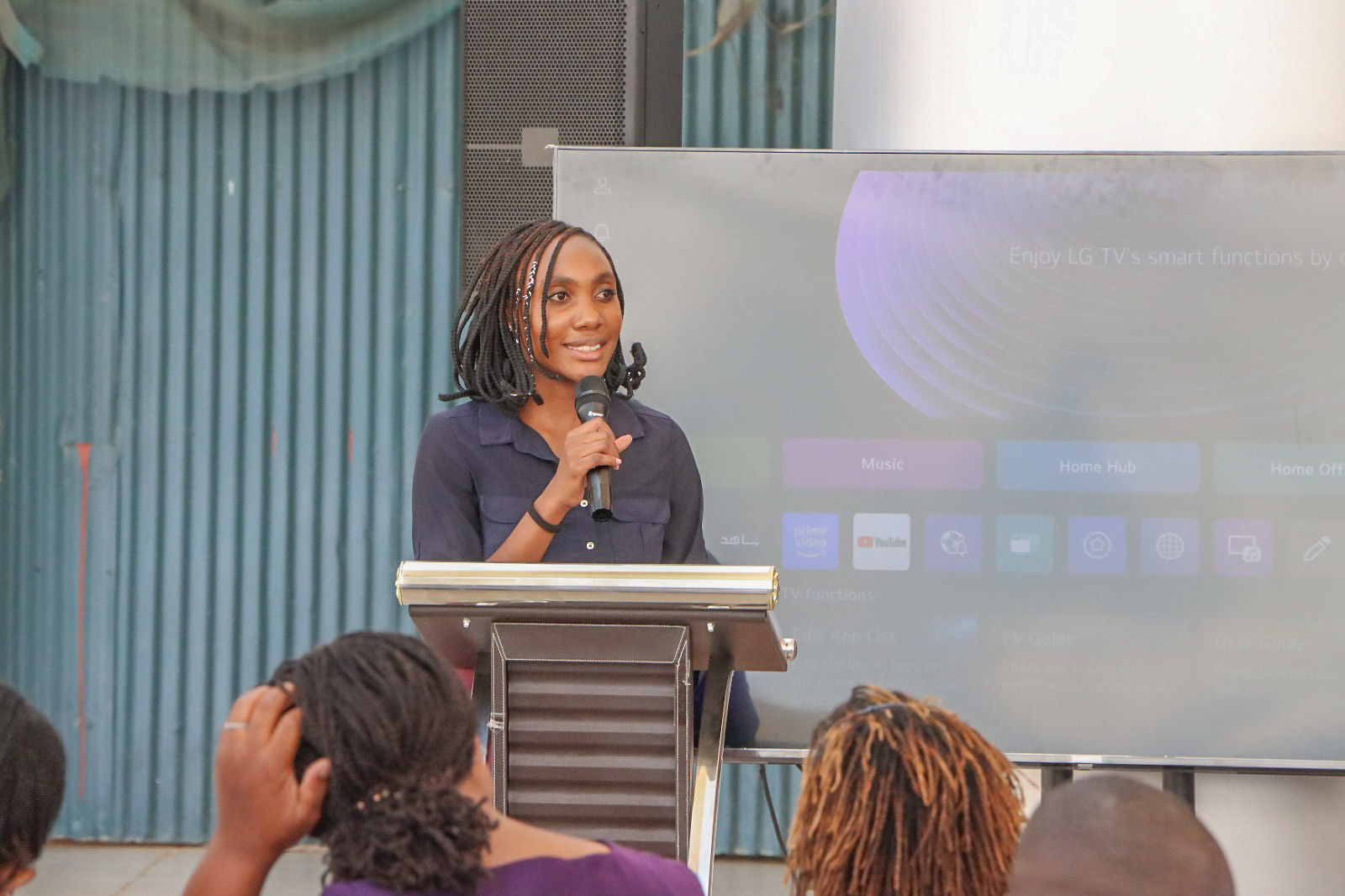
The top 10 teams advanced to a live demo and pitch round. Final rankings used a weighted model: 60% technical implementation, 40% demo and pitch performance, because we wanted to reward builders who could not only write strong code, but also communicate why it matters.
Top 3 Projects That Stole the Spotlight#
One pattern stood out across the top submissions: career navigation. In a country where young professionals are navigating rapidly evolving job markets, these students reached for AI to solve problems directly relevant to their own futures. That’s exactly the kind of locally meaningful, globally relevant problem-solving that open-source communities thrive on.
🏆 First Place: Arise – Smart Career Path Navigator by White Walkers#
Daryl Mbae (lead), Denis Kiptui, and Mohamed Ibrahim built Arise, a career co-pilot that takes a user’s resume, extracts skills, identifies gaps against target roles, and generates a personalized growth roadmap. What set it apart was the architecture: skills, roles, and learning pathways were modeled as a dynamic knowledge graph using Jac’s AI-native graph structure - a design decision that elevated the project well beyond simple resume matching into genuine structured reasoning about career development.
"Jaseci helped me focus on the problem instead of the plumbing. I spent less time stitching technologies together and more time designing the logic of the system itself, which is a refreshing change from typical development."
Denis Kiptui
Watch the demo: Arise – Built with Jac
🥈 Second Place: SkillAtlas by Jac Titans#
Linus Langat (lead), Rosalyne Muchiri, and Peter Masudi created SkillAtlas, a career evaluation dashboard that analyzes resumes against target jobs and recommends tailored learning resources. The project stood out for its complete user journey - from resume upload through gap analysis to actionable recommendations, backed by clean, intuitive visualizations that made complex data feel approachable. It’s a great example of what happens when you pair the Jaseci stack’s AI integration features with thoughtful UX design.
Watch the demo: SkillAtlas – Built with Jac
“At first, Jaseci seemed alien to me. I asked myself if I could build apps with it. I have been immersed in OOP (Object-Oriented Programming), but this time I had to use OSP (Object-Spatial Programming). Shifting mental models was a challenge. I managed to grasp OSP concepts (walkers, edges, and nodes). Without being confident enough, a hackathon was around the corner. I had to apply the new concepts within a short time. I was worried about how I would create routes, controllers, and serializers. After carefully reading the Jaseci documentation, I found that my perception was not true. The key thing I had to do was understand my project well and architect nodes (data containers), walkers (active agents), and edges (relationships). Once I had these, I spawned (started) walkers on the frontend. The walkers are the server API endpoints. We completed the application within the deadline and submitted it. Our project emerged in second position overall. This is the power of Jaseci. Fewer lines of code for an impactful project. Instead of writing prompts ourselves, we used the power of the by operator and semantics. I recommend it if you want to build AI-powered applications. More time savings with unmatched accuracy.”
Linus Langat
🥉 Third Place: SCPN by Gerry Migiro#
A solo project that earned its place among the best. Gerry Migiro built a Smart Career Path Navigator that systematically identifies strengths, surfaces skill gaps, and generates actionable development pathways. Building a complete, polished application alone is no small feat — and doing it with strong command of both Jac and generative reasoning workflows put Gerry ahead of most multi-person teams.
Watch the demo: SCPN – Built with Jac
“Building the smart career path navigator during the hackathon was honestly one of the most intense but rewarding parts of the whole program. Working solo on the project, there were definitely moments where I questioned whether everything would come together in time. There were moments I had to rethink my architecture and refactor parts of the system but the process pushed me to understand jac and OSP much more deeply. The office hour sessions with various mentors laid a comprehensive foundation for major areas thus enabling me to implement a working system which was incredibly satisfying and made me realize how much I had grown in just a few weeks.”
Gerry Gerson
Bigger Than a Hackathon#
This program was more than a competition. It was a proof point for something we believe deeply at Jaseci Labs: that the next generation of AI developers isn’t going to come from one country or one ecosystem. With the right foundations, the right tools, and the right mentorship, students anywhere in the world can move from learning about AI to building with it at scale.

The Kenya program is one of the most visible examples of this vision in action, but the momentum is global. Jaseci sees over 75,000 monthly downloads on PyPI from developers across six continents. Contributors, researchers, and builders from around the world are joining the community, testing the stack, and building things we never anticipated. That’s the power of open source.
Acknowledgments#
This program wouldn’t have been possible without our partners. Thank you to the Open University of Kenya for the institutional support, infrastructure, and belief in this collaboration. And a huge thank you to the National Science Foundation, whose support through the POSE (Pathways to Open-Source Ecosystems) program has been instrumental in enabling Jaseci to grow as a global, community-driven project. This is exactly the kind of real-world, international impact that open-source ecosystems can deliver when they’re invested in properly.
Get Involved#
Whether you’re a developer curious about AI-native programming, a university looking to bring cutting-edge AI curriculum to your students, or a contributor who wants to help shape the future of the Jaseci ecosystem — we’d love to hear from you.
-
Explore Jaseci: docs.jaseci.org
-
Star us on GitHub: github.com/Jaseci-Labs
-
Join the community: Discord
-
Install Jac: pip install jaclang
The best open-source communities are built by people all over the world solving problems that matter to them. Kenya showed us what that looks like. We can’t wait to see where the next chapter comes from.